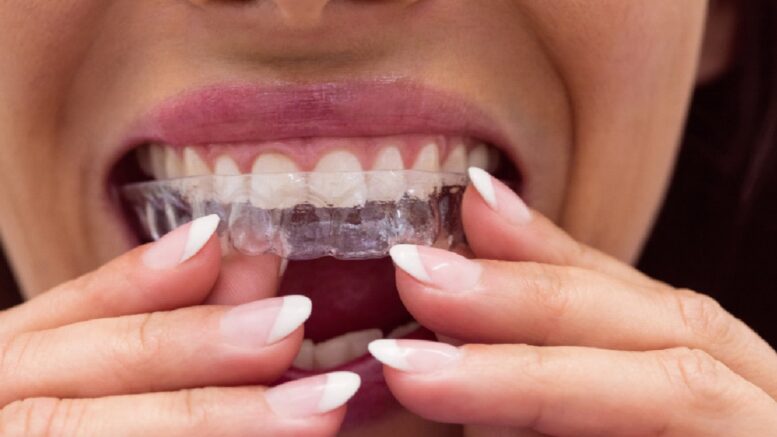
You get home from the fitting with a small plastic case, a sheet of printed instructions and a mouth that feels slightly too full. Whether the appointment was for Invisalign in Richmond or across town in Footscray, someone will have talked you through wear time and cleaning, probably twice. Standing in your own kitchen at 9pm, though, it’s still hard to picture keeping the trays in for 22 hours tomorrow, and the day after that, and the one after.
It does get easier. Usually within a week, although the first few days come with their own small surprises.
How much does the first week of Invisalign hurt?
It’s closer to pressure than pain for most patients, and it peaks early, somewhere in the first day or two. Biting into an apple on day one is a mistake you’ll probably only make once. Soft food helps. Scrambled eggs, risotto, the leftover dal at the back of the fridge.
The evidence backs this up reasonably well. A systematic review comparing Invisalign with fixed braces found aligner patients generally reported less pain in the first days of treatment, although a few months in, the gap between the two didn’t seem to hold. Every new set of aligners brings back a smaller version of that first tightness. A common trick is changing trays just before bed, so the worst of it happens while you’re asleep.
Where the 22 hours actually go
Twenty to 22 hours of wear leaves two to four hours for everything that isn’t plain water. Breakfast, lunch and dinner come out of that, plus brushing afterwards. Then there’s coffee, which is usually where it falls apart. A long black nursed through a morning of emails can quietly eat an hour and a half.
Patients tend to work out their own fixes after a week or so. Keeping the case in a work bag is the big one (a serviette at a restaurant is how aligners end up in the bin, and replacements aren’t free). Drinking the coffee with breakfast instead of across the morning helps too, along with a travel toothbrush in a desk drawer or, failing that, a proper rinse before the trays go back in.
Snacking mostly stops. Some patients count that as a perk.
Attachments, and the lisp
Attachments are small tooth-coloured bumps bonded onto some teeth so the aligners have something to push against. Not every case needs them. If yours does, they generally go on at the same appointment the first aligners are fitted, and your tongue will be poking at them before you’ve left the car park.
The lisp is real but brief. “S” sounds can come out a little soft for the first few days while your tongue relearns where everything sits (phone calls tend to give it away first). It fades quickly. Colleagues mostly don’t notice, even when you’re sure they have.
Week four looks different
By about the third or fourth week, putting the aligners back in after lunch is about as conscious as putting your shoes on. Cleaning is simple. Cool water rather than hot (heat can warp the plastic) and a soft brush morning and night. There’ll be a review appointment somewhere along the way to check your teeth are tracking the way the plan expects, and that’s the time to raise anything bugging you. A rough edge, say, or a tray that suddenly doesn’t click in as firmly as it did.
Nobody can give you a fixed end date on day one. It depends on how far teeth have to move and how faithfully the aligners get worn. The first month does settle the habits, though. Whichever ones you’ve landed on by week four (the case in the bag, the coffee at 7am rather than 10) tend to be the same ones doing the work in month six.