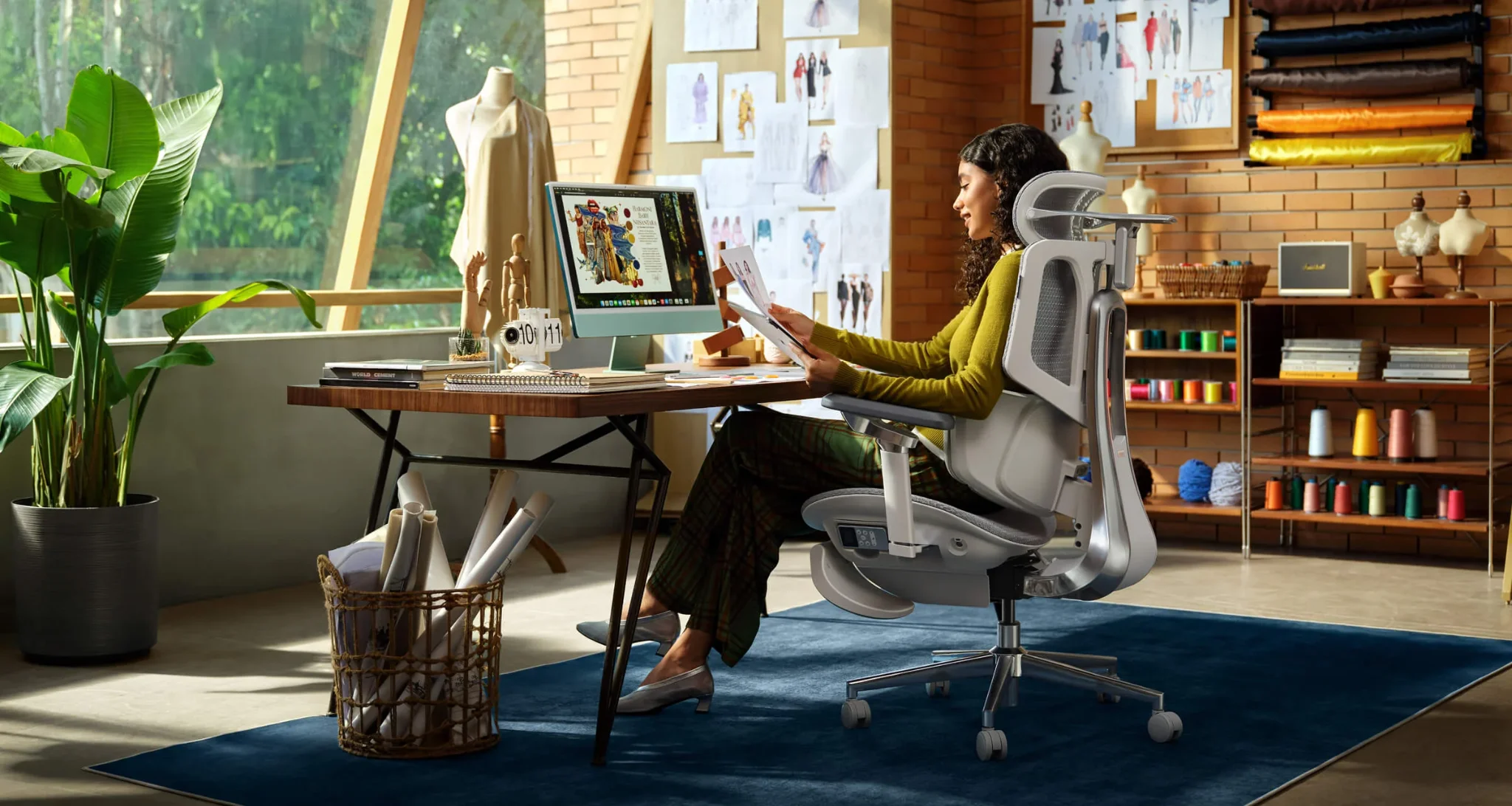
As more professionals embrace remote work and spend long hours at their desks, choosing the right office chair has become essential for maintaining comfort, productivity, and spinal health. One of the most important features to consider is lumbar support, which helps maintain the natural curve of the lower back and reduces strain during prolonged sitting.
However, not all lumbar support systems are created equal. Traditional office chairs typically use fixed lumbar support, while newer ergonomic designs incorporate dynamic systems that move with the user. Understanding the differences between these two approaches can help you select the right chair for healthier sitting.
Brands like hbada.com have embraced advanced ergonomic engineering, developing innovative dynamic lumbar technologies that offer greater adaptability and long-term comfort. Instead of paying luxury-brand prices for advanced ergonomic features, buyers can choose a thoughtfully designed ergonomic office chair that delivers intelligent lumbar support, premium adjustability, and durable construction for everyday use.
Why Lumbar Support Matters
The lumbar spine naturally curves inward, helping distribute body weight and absorb pressure. Unfortunately, sitting for extended periods—especially in poorly designed chairs—can flatten this curve, placing additional stress on muscles, ligaments, and spinal discs.
Proper lumbar support helps:
- Maintain the spine’s natural alignment
- Reduce pressure on the lower back
- Minimize muscle fatigue
- Improve posture
- Increase comfort during extended work sessions
Whether you work in an office or from home, quality lumbar support is one of the most valuable ergonomic features you can invest in.
What Is Fixed Lumbar Support?
Fixed lumbar support refers to a stationary support structure built into the chair’s backrest. It is positioned in one location and provides consistent pressure against the lower back.
Advantages
- Simple design
- Lower manufacturing cost
- Minimal adjustments required
- Suitable for occasional office use
Limitations
Although fixed lumbar support can improve posture compared to chairs without lumbar support, it has several drawbacks.
Because the support remains stationary, it may not align perfectly with every user’s body. As you lean forward, recline, or shift positions throughout the day, the lumbar support often loses contact with your lower back.
This can reduce its effectiveness and lead to increased fatigue during long periods of sitting.
What Is Dynamic Lumbar Support?
Dynamic lumbar support is designed to move with your body instead of remaining in a fixed position.
As your posture changes throughout the day, the lumbar system continuously follows your lower back, maintaining consistent support and encouraging healthier spinal alignment.
Modern ergonomic chairs often combine dynamic movement with multiple adjustment options, allowing users to customize support according to their body type and sitting habits.
HBADA’s Innovative Three-Zone Elastic Lumbar Support
HBADA has taken dynamic lumbar support a step further with its patented Three-Zone Elastic Lumbar Support system, featured in premium models such as the HBADA E3 Pro 2026 Edition and HBADA X7 Smart Ergonomic Chair.
Unlike traditional fixed lumbar cushions, HBADA’s system is engineered to support the lumbar region from the L1 to L5 vertebrae while adapting to natural body movement.
Key features include:
- 5° dynamic lumbar tracking
- 28 mm vertical adjustment
- 15 mm depth adjustment
- 17 mm gliding sacral support
This intelligent design helps maintain continuous contact with the lower back, whether you’re sitting upright, leaning forward during focused work, or reclining for a short break.
Dynamic vs. Fixed Lumbar Support
1. Adaptability
Fixed lumbar support remains in one position regardless of how you sit.
Dynamic lumbar systems continuously respond to changes in posture, providing more consistent spinal support throughout the day.
Winner: Dynamic lumbar support
2. Comfort During Long Work Hours
Professionals who spend eight or more hours at a desk frequently change positions without realizing it.
Dynamic support accommodates these natural movements, reducing pressure points and helping prevent discomfort from developing over time.
Fixed systems may feel comfortable initially but often become less supportive as posture changes.
Winner: Dynamic lumbar support
3. Personalized Ergonomics
Every person’s body is different.
Advanced ergonomic chairs like those from HBADA include multiple lumbar adjustments, allowing users to fine-tune height, depth, and positioning for a more personalized seating experience.
Fixed lumbar support offers little or no customization.
Winner: Dynamic lumbar support
4. Long-Term Spinal Health
Maintaining consistent lumbar contact encourages healthier sitting posture throughout the workday.
Because dynamic systems continue supporting the lower back during movement, they can better promote spinal alignment than static alternatives.
While proper posture also depends on desk setup and healthy work habits, adaptive lumbar support provides an important ergonomic advantage.
Winner: Dynamic lumbar support
Ergonomic Features Beyond Lumbar Support
While lumbar support is critical, it’s only one part of a complete ergonomic chair.
HBADA combines its dynamic lumbar technology with several advanced ergonomic features, including:
- 4D Dual-Axis Headrest that supports the C3–C7 cervical vertebrae
- 720° Omni-Mechanical Armrests that adapt to multiple working positions
- CloudMesh Technology with enhanced elasticity and pressure distribution
- Gravity-Sensing Chassis that automatically adjusts reclining resistance
- 140° reclining mechanism with four-position lock
- Adjustable seat depth and backrest height
Together, these features create a seating experience that supports the entire body during extended work sessions.
Who Benefits Most from Dynamic Lumbar Support?
Dynamic lumbar support is especially valuable for people who spend long hours seated, including:
- Remote workers
- Software engineers
- Designers
- Architects
- Financial professionals
- Content creators
- Students
- Gamers
For these users, an advanced ergonomic office chair can help improve comfort while supporting healthier posture throughout the workday.
Why HBADA Stands Out
HBADA has established itself as a leader in ergonomic seating by focusing on innovative technology rather than simply adding more padding.
Its philosophy—Professional-grade ergonomics at a friendly price—is reflected in products that combine premium engineering with exceptional value.
Instead of paying luxury-brand prices for advanced ergonomic features, buyers can choose a thoughtfully designed ergonomic office chair that delivers intelligent lumbar support, premium adjustability, and durable construction for everyday use.
Final Thoughts
When comparing dynamic and fixed lumbar support, the advantages of a dynamic system are clear. By adapting to your movements, maintaining continuous contact with your lower back, and offering personalized adjustments, dynamic lumbar support provides a more comfortable and supportive seating experience for extended periods of work.
HBADA’s patented Three-Zone Elastic Lumbar Support demonstrates how ergonomic innovation can improve everyday sitting without requiring the premium prices often associated with high-end office furniture. Combined with features like CloudMesh Technology, a 4D Dual-Axis Headrest, and 720° Omni-Mechanical Armrests, HBADA chairs are designed to support healthier posture and greater productivity.