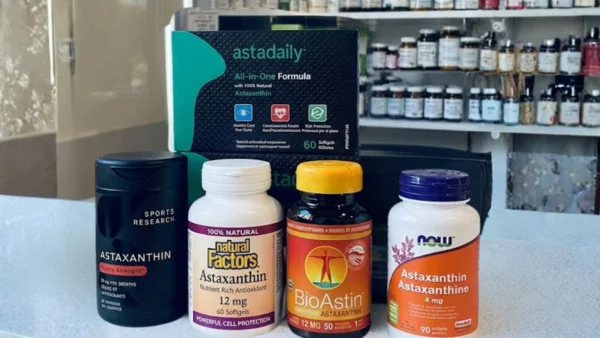
Astaxanthin is a naturally occurring carotenoid antioxidant produced by the microalgae Haematococcus pluvialis and is widely used in high-quality astaxanthin supplements. It is best known for its exceptional antioxidant activity and for its ability to cross both the blood–brain barrier and the blood–retinal barrier, allowing it to reach sensitive neural and ocular tissues directly.
This unique tissue distribution distinguishes astaxanthin from many other dietary antioxidants and explains why it has been extensively studied for its role in reducing oxidative stress and supporting inflammatory balance—two biological processes closely linked to cellular aging and long-term health.
From a clinical perspective, the benefits of astaxanthin are best understood as supportive rather than therapeutic. Current human research has primarily focused on its role in:
- Supporting cardiovascular health through antioxidant and anti-inflammatory mechanisms (Saeidi et al., 2023)
- Contributing to skin health and photoprotection by reducing UV-induced oxidative damage (Ito et al., 2018)
- Supporting visual function by protecting retinal tissues from oxidative stress (Saito et al., 2011)
- Promoting general wellness by enhancing overall antioxidant balance (Balcerczyk et al., 2014)
Unlike antioxidants that act primarily in localized tissues, astaxanthin demonstrates broad systemic distribution, which helps explain its investigation across multiple physiological systems. For this reason, astaxanthin supplementation is generally viewed as a way to support cellular protection and oxidative balance, rather than as a treatment for specific medical conditions.
2. Comparison Table: Best Astaxanthin Supplements (2026)
| Products | Astaxanthin Source | Daily Serving | Packaging | Regulatory / Certifications | Manufacturing Location |
| Astadaily All-in-One | Closed bioreactor + Supercritical CO₂ extraction | 12mg astaxanthin + 8 other ingredients | Blister-sealed softgels | Health Canada NPN, GMP, Third-party tested, Non-GMO | Canada |
| BioAstin Hawaiian | Open pond + solvent extraction | 12 mg astaxanthin | Softgels in Bottle | GMP, Third-party tested | USA |
| Sports Research | Photobioreactor + Supercritical CO₂ extraction | 12 mg astaxanthin | Softgels in Bottle | GMP, IGEN Non-GMO | USA |
| NOW Foods | Unknown | 4 mg astaxanthin | Softgels in Bottle | GMP facility, Non-GMO | Unknown |
| Natural Factors | Unknown | 12 mg astaxanthin | Softgels in Bottle | Health Canada NPN, ISURA, Non-GMO | Unknown |
3. How I Evaluate the Best Astaxanthin Supplements
When reviewing astaxanthin supplements, I prioritize scientific and pharmaceutical quality over branding or marketing claims. The following criteria reflect how astaxanthin is evaluated in clinical and formulation settings and help distinguish high-quality products from lower-grade alternatives.
1. Formula Design & Astaxanthin Dosage
Astaxanthin is clinically effective as a standalone antioxidant when provided at dosages commonly studied in humans, typically 8–12 mg per day. While some formulations include additional nutrients, these should serve a clear functional role—such as enhancing astaxanthin absorption or supporting antioxidant synergy—rather than simply increasing label complexity.
Why it matters: Proper dosing and purposeful formulation are essential for consistent biological activity.
2. Cultivation Method & Extraction Process
The quality of natural astaxanthin begins with how the microalgae are grown and processed:
- Closed bioreactors offer the highest level of environmental control, minimizing contamination and ensuring consistent pigment production.
- Photobioreactors provide partial control but may be affected by seasonal or light variability.
- Open pond systems carry higher risks of contamination and batch inconsistency.
- Supercritical CO₂ extraction is preferred, as it preserves astaxanthin’s molecular integrity without the use of chemical solvents.
Why it matters: Cultivation and extraction directly impact purity, stability, and safety.
3. Carrier Oil & Bioavailability
Because astaxanthin is fat-soluble, its absorption depends heavily on the lipid carrier used in the supplement. Clinical evidence suggests that fish oil and medium-chain triglycerides (MCTs) enhance astaxanthin bioavailability more effectively than powder-based products or some vegetable oils.
Why it matters: Poor absorption can significantly reduce the effectiveness of even high-dose supplements.
4. Manufacturing Standards & Regulatory Compliance
High-quality astaxanthin supplements should meet recognized regulatory and manufacturing standards. In Canada, a Health Canada NPN confirms that the product’s ingredients, dosage, stability, and safety data have been reviewed. GMP certification and third-party testing provide additional quality assurance.
Why it matters: Regulatory oversight helps protect against contamination, mislabeling, and dosage inconsistencies.
5. Packaging Technology & Product Stability
Astaxanthin is sensitive to oxygen, light, and heat, which can degrade its antioxidant activity over time. Blister-sealed softgels offer superior protection by isolating individual doses, whereas bottled softgels may be more susceptible to oxidation and cross-contamination once opened.
Why it matters: Packaging plays a critical role in preserving potency throughout the product’s shelf life.
4. Individual Product Reviews
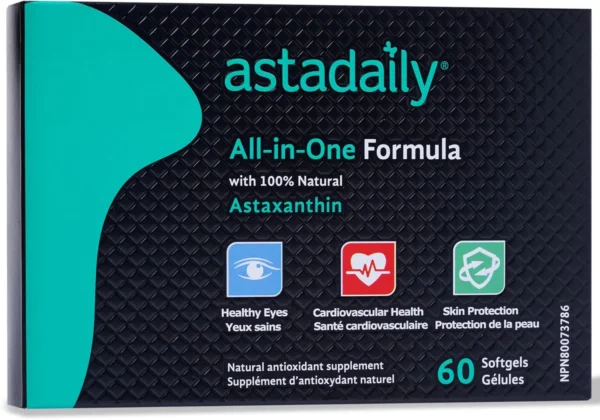
⭐#1 Astadaily® All-in-One — Astaxanthin Supplement Review
Best suited for:
Individuals seeking a high-quality natural astaxanthin supplement with a comprehensive antioxidant formulation, strong regulatory oversight, proven market credibility, and superior product stability for long-term daily use.
Key Details
- Astaxanthin dose: 12 mg per serving
- Source: Natural astaxanthin from Haematococcus pluvialis (AlgaeAsta®)
- Form: Astaxanthin oil extracted by supercritical CO2
- Carrier oil: Fish oil
- Packaging: Blister-sealed softgels
- Manufacturing & standards: Manufactured in Canada; licensed with a Health Canada Natural Product Number (NPN)
Why It Made the List
Astadaily® All-in-One distinguishes itself not only through formulation quality, but also through its scientific and Canadian foundation. The brand has been in the market for more than nine years, specializing specifically in astaxanthin—a level of focus that is uncommon in the supplement space.
The team behind Astadaily includes researchers with academic roots at the University of Toronto, with peer-reviewed publications related to Haematococcus pluvialis and astaxanthin. While the product is positioned for everyday wellness users, its development reflects a research-driven mindset rather than a trend-based approach.
In addition to delivering a clinically relevant 12 mg dose of natural astaxanthin, the formula includes lutein, anthocyanins, and other plant-derived antioxidants commonly studied for ocular and retinal support. This combination mirrors how antioxidants function biologically—as a cooperative system rather than isolated ingredients.
Strengths
- Provides a high-dose (12 mg) natural astaxanthin aligned with human clinical studies
- Backed by a brand with over nine years of astaxanthin-specific market experience
- Uses closed-system microalgae cultivation and supercritical CO₂ extraction to preserve purity
- Fish oil carrier improves astaxanthin bioavailability while supplying omega-3 fatty acids
- Blister packaging protects each softgel from oxygen, light, and moisture, reducing oxidation risk
- Made in Canada and Licensed with a Health Canada NPN, reflecting regulatory review of safety, dosage, and labeling
Considerations
- The multi-ingredient, synergistic formulation increases manufacturing complexity and cost
- Higher price point compared to single-ingredient astaxanthin supplements, which may meet the needs of some users
Doctor’s Note
From a clinical perspective, Astadaily® All-in-One is best characterized by its formulation discipline, absorption strategy, and long-term stability—rather than aggressive performance claims. Its extended presence in the Canadian market and research-informed development approach make it particularly suitable for individuals who value consistency, transparency, and regulatory assurance in a daily antioxidant supplement.
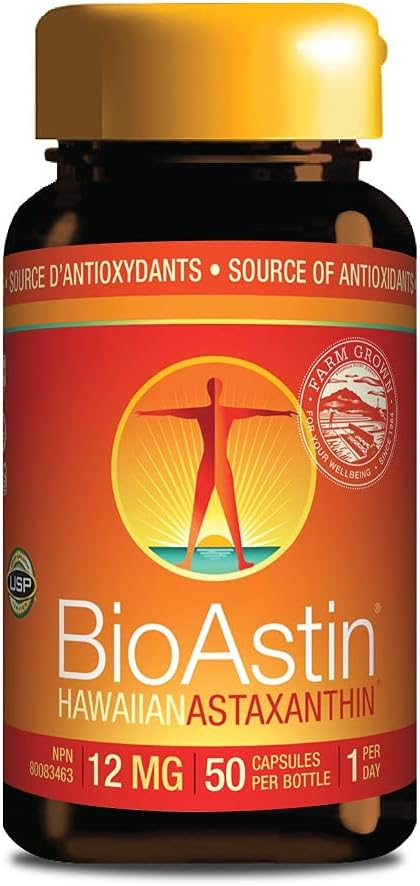
#2 BioAstin® Hawaiian — Astaxanthin Supplement Review
Best suited for:
Users seeking a well-studied, single-ingredient astaxanthin supplement with a long clinical history and extensive use in human research.
Key Details
- Astaxanthin dose: 12 mg per serving
- Source: Natural astaxanthin from Haematococcus pluvialis
- Form: Extracted astaxanthin oil
- Carrier oil: High-oleic safflower oil
- Packaging: Bottled softgels
- Manufacturing & standards: Strong GMP compliance; widely referenced in clinical studies
Why It Made the List
BioAstin® Hawaiian is one of the most extensively documented astaxanthin supplements in clinical literature and has frequently been used as a reference product in early human studies. Its long-standing presence in the market and consistent formulation have contributed to a substantial body of research evaluating astaxanthin’s antioxidant activity and general wellness applications.
The product uses astaxanthin derived from Haematococcus pluvialis cultivated in open-pond systems in Hawaii—an established production approach that has supported large-scale research use over several decades. While this method is proven and effective, it relies on natural environmental conditions, which can introduce more variability compared with fully enclosed cultivation systems.
High-oleic safflower oil is used as the lipid carrier, providing a stable monounsaturated fat that supports the absorption of fat-soluble antioxidants. This straightforward formulation aligns with BioAstin’s role as a benchmark product rather than a formulation-driven innovation.
Strengths
- One of the most documented natural astaxanthin sources in clinical literature
- Provides a clinically relevant 12 mg dose
- Simple, single-ingredient formulation without added antioxidants
- Strong GMP manufacturing standards and long-term market consistency
Considerations
- Bottled softgel packaging carries a higher risk of oxidation and cross-contamination compared to blister-sealed formats
- Open-pond cultivation introduces greater environmental variability than closed-system production
- Lacks formulation enhancements or packaging technologies designed to optimize long-term stability
Doctor’s Note
From a clinical perspective, BioAstin® Hawaiian remains a reference-standard astaxanthin supplement with a well-established research history. Its primary strengths lie in clinical familiarity and dosage consistency rather than advanced formulation or packaging design. It is best suited for users who value historical research precedent and simplicity over newer stability or delivery optimizations.
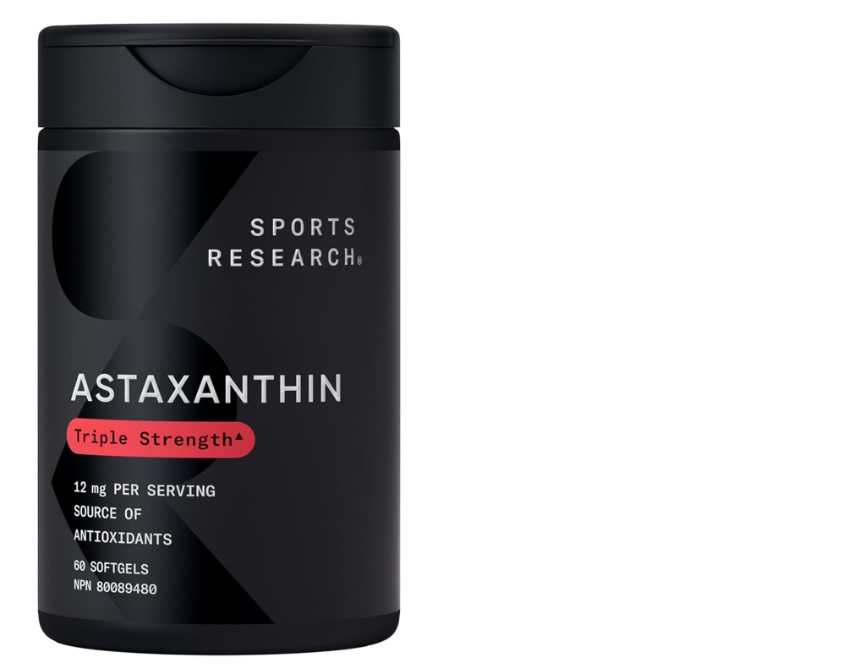
#3 Sports Research – Astaxanthin Supplement Review
Best suited for:
Individuals seeking a vegan, allergen-conscious astaxanthin supplement with transparent sourcing, clean-label formulation, and plant-based lipid carriers.
Key Details
- Astaxanthin dose: 12 mg per serving
- Source: Natural astaxanthin from Haematococcus pluvialis (AstaLif™)
- Form: Astaxanthin oil extracted by supercritical CO2
- Carrier oil: Organic coconut oil (MCT-rich)
- Packaging: Bottled softgels
- Manufacturing & standards: GMP-certified facilities with strong ingredient traceability
Why It Made the List
Sports Research® distinguishes itself through a fully plant-based formulation designed for vegan and allergen-conscious users. The product uses AstaLif™ astaxanthin sourced from Iceland, a supplier known for controlled microalgae production and consistent quality standards.
Astaxanthin is extracted using supercritical CO₂, a solvent-free method that helps preserve molecular integrity while avoiding chemical residues. The algae are cultivated using photobioreactor systems, which provide greater environmental control and lower contamination risk than open-pond methods, though some seasonal variability may still occur due to reliance on natural sunlight.
Organic coconut oil, rich in medium-chain triglycerides (MCTs), is used as the lipid carrier to support absorption of this fat-soluble carotenoid while remaining compatible with vegan dietary preferences. The formulation delivers a clinically relevant 12 mg dose without added antioxidants, aligning with a clean-label, minimalist approach.
Strengths
- Vegan and allergen-conscious formulation with plant-based carrier oil
- Uses a well-regarded astaxanthin source (AstaLif™) with strong sourcing transparency
- Supercritical CO₂ extraction supports purity and molecular stability
- GMP-compliant manufacturing and clean-label standards
Considerations
- Bottled softgel packaging presents a higher risk of oxidation and cross-contamination compared with blister-sealed formats
- Lacks Health Canada NPN licensing, resulting in less regulatory oversight than some Canada-licensed products
Doctor’s Note
From a clinical perspective, Sports Research® astaxanthin is best viewed as a high-quality vegan alternative with solid sourcing, extraction, and formulation practices. Its primary limitations relate to packaging format and regulatory framework rather than dosage or ingredient integrity, making it a practical option for individuals prioritizing plant-based supplementation and clean-label transparency.
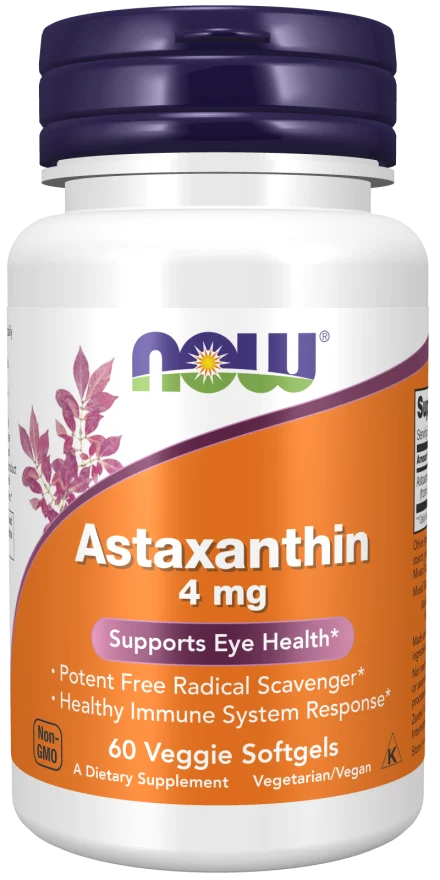
#4 NOW Foods – Astaxanthin Supplement Review
Best suited for:
Users seeking a reliable, entry-level astaxanthin supplement with a simple, single-ingredient formulation from a well-established and widely available brand.
Key Details
- Astaxanthin dose: 4 mg per softgel (suggested intake: 2–4 softgels daily)
- Source: Natural astaxanthin from Haematococcus pluvialis (Zanthin®)
- Form: Extracted astaxanthin oil
- Carrier oil: Olive oil
- Packaging: Bottled softgels
- Manufacturing & standards: GMP-certified facilities with long-standing quality control practices
Why It Made the List
NOW Foods® Astaxanthin is positioned as a straightforward, accessible option for individuals new to astaxanthin supplementation. The formulation focuses exclusively on astaxanthin without additional antioxidants or functional ingredients, allowing users to tailor intake by adjusting capsule count.
The product uses Zanthin®, a branded natural astaxanthin derived from Haematococcus pluvialis. While the cultivation source is identified, the extraction method is not publicly specified, which limits evaluation of molecular preservation compared with supercritical CO₂–based processes. Olive oil is used as the lipid carrier, providing a stable, plant-based medium that supports absorption of fat-soluble carotenoids, though it may offer less optimized bioavailability than fish oil or MCT-rich carriers.
This minimalist approach prioritizes consistency, affordability, and dosing flexibility over advanced formulation or packaging technologies.
Strengths
- Simple, single-ingredient formulation
- Flexible dosing suitable for first-time or conservative users
- Manufactured in GMP-certified facilities
- Strong brand reputation for consistency and accessibility
Considerations
- Lower per-serving dose may require multiple capsules to reach clinically studied levels
- Bottled softgel packaging increases oxidation and cross-contamination risk
- Limited transparency regarding extraction method
Doctor’s Note
From a clinical perspective, NOW Foods® Astaxanthin serves as a dependable entry-level supplement for individuals beginning astaxanthin use. While it does not incorporate advanced formulation, bioavailability, or packaging strategies, it offers predictable quality and flexible dosing suitable for gradual introduction into a general wellness routine.
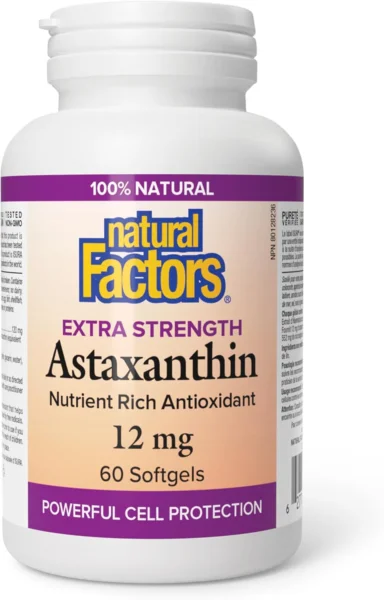
#5 Natural Factors — Astaxanthin Supplement Review
Best suited for:
Users seeking a simple, Canada-regulated astaxanthin supplement with a straightforward formulation and verified regulatory compliance, and predictable dosing.
Key Details
- Astaxanthin dose: 12 mg per serving
- Source: Astaxanthin (source not publicly disclosed)
- Form: Extracted astaxanthin oil
- Carrier oil: Flax oil
- Packaging: Bottled softgels
- Manufacturing & regulation: packed in Canada; licensed with a Health Canada Natural Product Number (NPN)
Why It Made the List
Natural Factors® Astaxanthin is a minimalist, regulatory-focused product designed for users who prioritize Canadian oversight and compliance over formulation innovation. The supplement delivers a clinically relevant 12 mg dose of astaxanthin without additional active ingredients, making it suitable for individuals seeking a single-ingredient, no-frills option.
Although the cultivation source and extraction method are not publicly disclosed, the product’s Health Canada NPN approval ensures that safety, ingredient identity, and dosage accuracy meet rigorous regulatory standards. Flax oil is used as the lipid carrier to support absorption of this fat-soluble carotenoid, though bioavailability may be somewhat lower compared with fish oil or MCT-rich carriers.
Strengths
- Provides a clinically relevant 12 mg dose aligned with human studies
- Licensed with a Health Canada NPN, ensuring regulatory compliance
- Simple, single-ingredient formulation
- Packed in Canada, supporting reliability
Considerations
- Limited disclosure regarding cultivation and extraction methods
- Bottled packaging increases oxidation and cross-contamination risk
- Carrier oil may offer lower bioavailability than alternative lipid systems
Doctor’s Note
From a clinical perspective, Natural Factors astaxanthin is best viewed as a regulatory-focused, no-frills supplement. Its primary strengths lie in compliance and simplicity, while limitations relate to transparency, bioavailability optimization, and packaging technology, making it most suitable for users who prioritize regulatory assurance over advanced formulation design.
5. Buyer’s Guide: How to Choose the Best Astaxanthin Supplement
Ideal Astaxanthin Dosage
Choosing the correct astaxanthin dosage depends on your health goals and level of oxidative stress.
- 4–6 mg per day: Suitable for general antioxidant support and first-time users looking to incorporate astaxanthin into a daily wellness routine.
- 8–12 mg per day: The most commonly studied clinical range in human research, often used for eye health, skin support, exercise recovery, and overall oxidative balance.
For best results, astaxanthin should be taken consistently and with a meal containing healthy fats to support absorption.
Natural vs. Synthetic Astaxanthin
When selecting an astaxanthin supplement, source matters.
- Choose natural, algae-derived astaxanthin sourced from Haematococcus pluvialis, the form used in the majority of human clinical studies.
- Avoid synthetic astaxanthin, which is primarily produced for aquaculture feed and has limited evidence supporting its use in human supplementation.
Natural astaxanthin provides the biologically relevant isomer profile associated with antioxidant activity in humans.
Safety & Tolerability
Astaxanthin is generally well tolerated when used within studied dosage ranges. Reported side effects are uncommon and typically mild.
Possible effects may include:
- Slight reduction in blood pressure
- Temporary warm or reddish skin tone at higher intakes
Individuals who are pregnant, breastfeeding, or using antihypertensive medications should consult a qualified healthcare professional before starting astaxanthin supplementation.
Quick Buyer Tip
When choosing an astaxanthin supplement, absorption, safety, and quality are key. Not all forms of astaxanthin are equal—powdered formulations in hard capsules, for example, tend to have lower bioavailability compared with oil-based softgels. Selecting a product with proven delivery and transparent manufacturing ensures you get the full benefits of this antioxidant.
- Natural microalgae sourcing
- A clinically studied dosage
- An oil-based delivery system, as powder forms generally offer lower absorption
- Transparent manufacturing and safety standards
6. FAQ
1. Is astaxanthin a medication or a dietary supplement?
Astaxanthin is classified as a dietary supplement rather than a pharmaceutical drug. It is not intended to diagnose, treat, cure, or prevent disease. Its primary role is to provide antioxidant support and to contribute to normal physiological functions related to oxidative balance.
2. Can astaxanthin replace prescribed eye or cardiovascular medications?
No. Astaxanthin should not be regarded as a substitute for prescription medications. It may be considered as a complementary nutritional component within a balanced diet and standard medical care, but clinical management and treatment decisions must remain under physician supervision.
3. Does a higher dose always produce better results?
Not necessarily. Most human clinical studies have used doses in the range of 6–12 mg per day. Doses above this range have not consistently demonstrated additional benefit and may increase the likelihood of minor, dose-related side effects. In antioxidant supplementation, higher intake does not automatically translate into greater physiological effect.
4. Why does the carrier oil matter?
Astaxanthin is a fat-soluble compound, and its absorption is highly dependent on the presence and type of lipid carrier.
- Fish oil and MCT-based oils generally provide higher bioavailability.
- Plant-based oils such as olive oil or flax oil support absorption adequately but are often less efficient.
The carrier oil therefore plays a significant role in determining the effective dose delivered to the body.
7. Does regulatory approval guarantee clinical effectiveness?
No. Regulatory licensing (such as Health Canada’s Natural Product Number, NPN) ensures standards for safety, quality control, and labeling accuracy. It does not establish therapeutic effectiveness. Clinical outcomes depend on multiple variables, including dosage, formulation, absorption, and individual patient factors.
9. Is synthetic astaxanthin acceptable?
Synthetic astaxanthin differs structurally from the naturally occurring form and has not demonstrated equivalent biological activity in human studies. Most clinical research and safety data support the use of algae-derived astaxanthin, which is therefore preferred in supplementation.
10. Who should use caution with astaxanthin?
Caution is advised for individuals who:
- Are using antihypertensive medications
- Have a history of low blood pressure (hypotension)
- Are pregnant or breastfeeding, due to limited long-term safety data
7. Final Verdict from a Medical Perspective
From a clinical standpoint, astaxanthin is a well-studied antioxidant with a favorable safety profile when naturally sourced from microalgae and used at evidence-based dosages. When evaluating astaxanthin supplements, healthcare professionals prioritize natural sourcing, bioavailability, formulation transparency, manufacturing standards, and regulatory compliance over marketing-driven claims or complex ingredient blends.
Based on these criteria, Astadaily® All-in-One stands out as a top choice. Its high-quality natural astaxanthin, research-informed formulation, blister-sealed packaging, and long-standing presence in the market make it particularly suitable for individuals seeking consistent dosing, reliable absorption, and long-term wellness support. For those looking to integrate astaxanthin into a balanced health routine, selecting a supplement like Astadaily ensures both efficacy and regulatory assurance.
Medical Disclaimer
This content is intended for educational and informational purposes only and does not constitute medical advice. It should not be used to diagnose, treat, cure, or prevent any disease. Always consult a qualified healthcare professional before starting, stopping, or modifying any supplement or health-related regimen.
References
Balcerczyk, A., Gajewska, A., Macierzyńska-Piotrowska, E., Pawelczyk, T., Bartosz, G., & Szemraj, J. (2014). Enhanced Antioxidant Capacity and Anti-Ageing Biomarkers after Diet Micronutrient Supplementation. Molecules, 19(9), 14794–14808.
Ito, N., Seki, S., & Ueda, F. (2018). The Protective Role of Astaxanthin for UV-Induced Skin Deterioration in Healthy People—A Randomized, Double-Blind, Placebo-Controlled Trial. Nutrients, 10(7), 817.
Parisi, V., Tedeschi, M., Gallinaro, G., Varano, M., Saviano, S., & Piermarocchi, S. (2008). Carotenoids and Antioxidants in Age-Related Maculopathy Italian Study. Ophthalmology, 115(2), 324-333.e2.
Saito, M., Yoshida, K., Saito, W., Fujiya, A., Ohgami, K., Kitaichi, N., Tsukahara, H., Ishida, S., & Ohno, S. (2011). Astaxanthin increases choroidal blood flow velocity. Graefe’s Archive for Clinical and Experimental Ophthalmology, 250(2), 239–245.
Saeidi, A., Nouri-Habashi, A., Razi, O., Ataeinosrat, A., Rahmani, H., Mollabashi, S. S., Bagherzadeh-Rahmani, B., Aghdam, S. M., Khalajzadeh, L., Al Kiyumi, M. H., Hackney, A. C., Laher, I., Heinrich, K. M., & Zouhal, H. (2023). Astaxanthin Supplemented with High-Intensity Functional Training Decreases Adipokines Levels and Cardiovascular Risk Factors in Men with Obesity. Nutrients, 15(2), 286.
Reviewed by: Dr. Edward Gerson, MD
Last updated: January 2026